Ripple
Self-Guided | Summer 2026
Design a portable device for a user with specific needs to enhance quality of everyday life.
Concept Brief
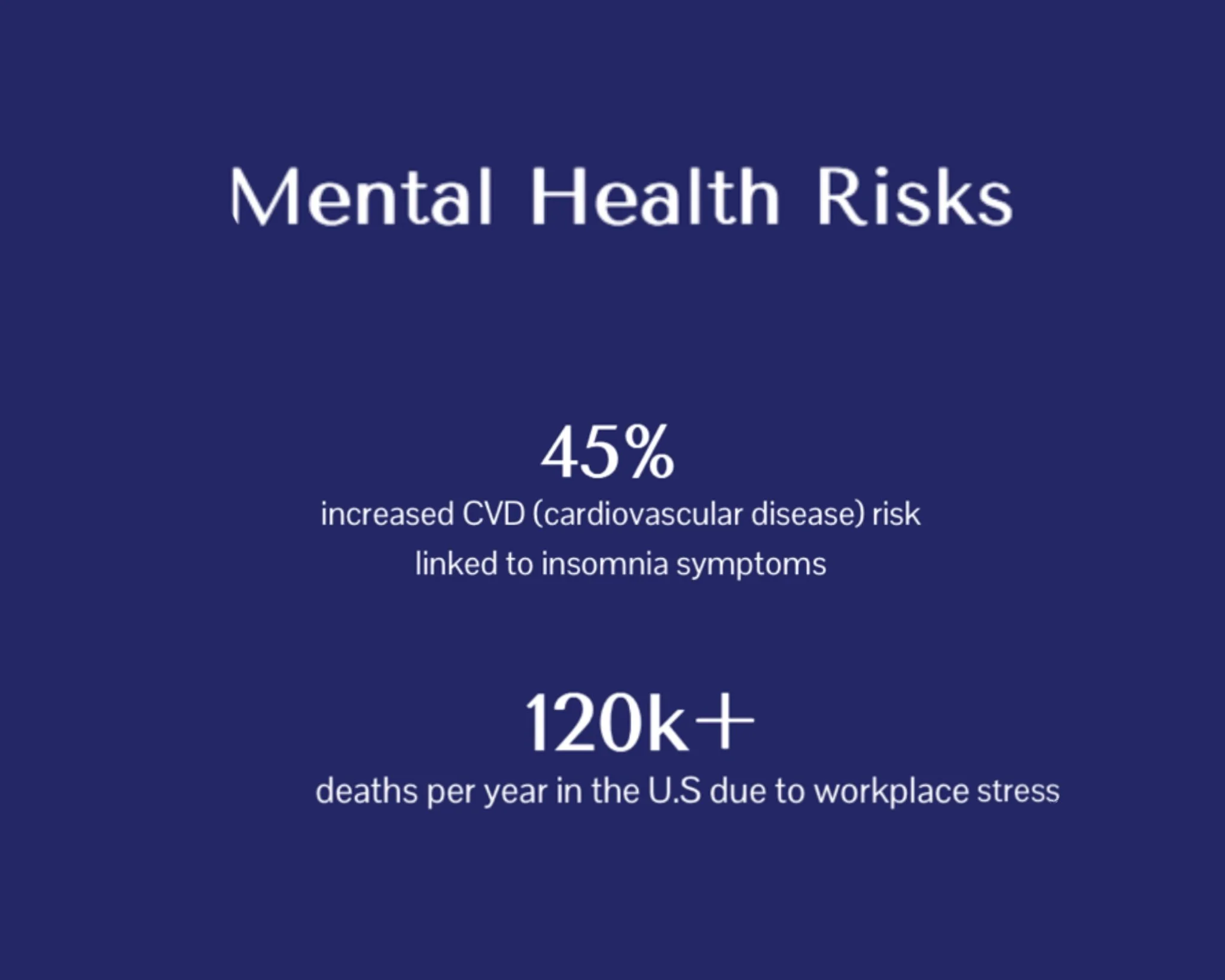
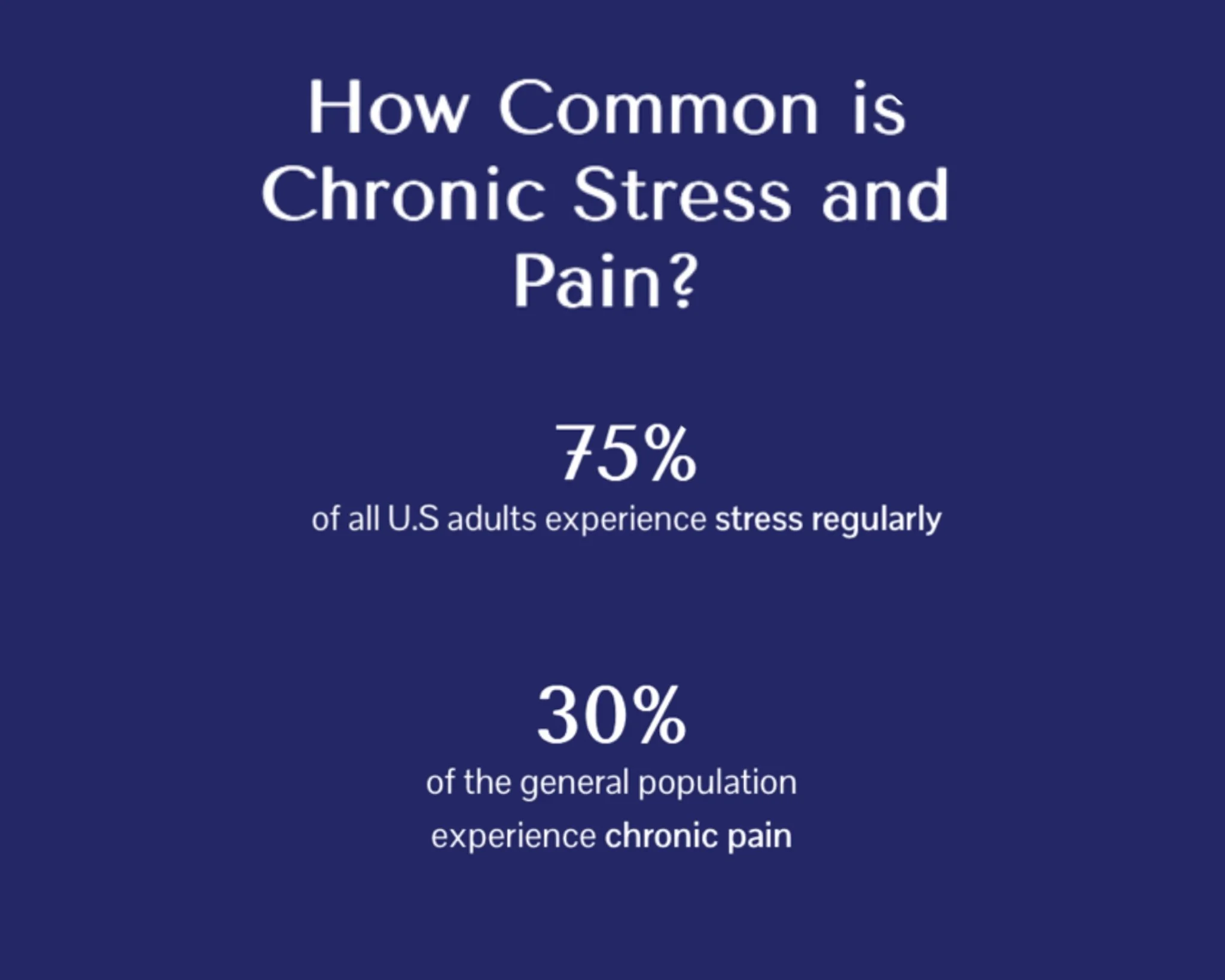
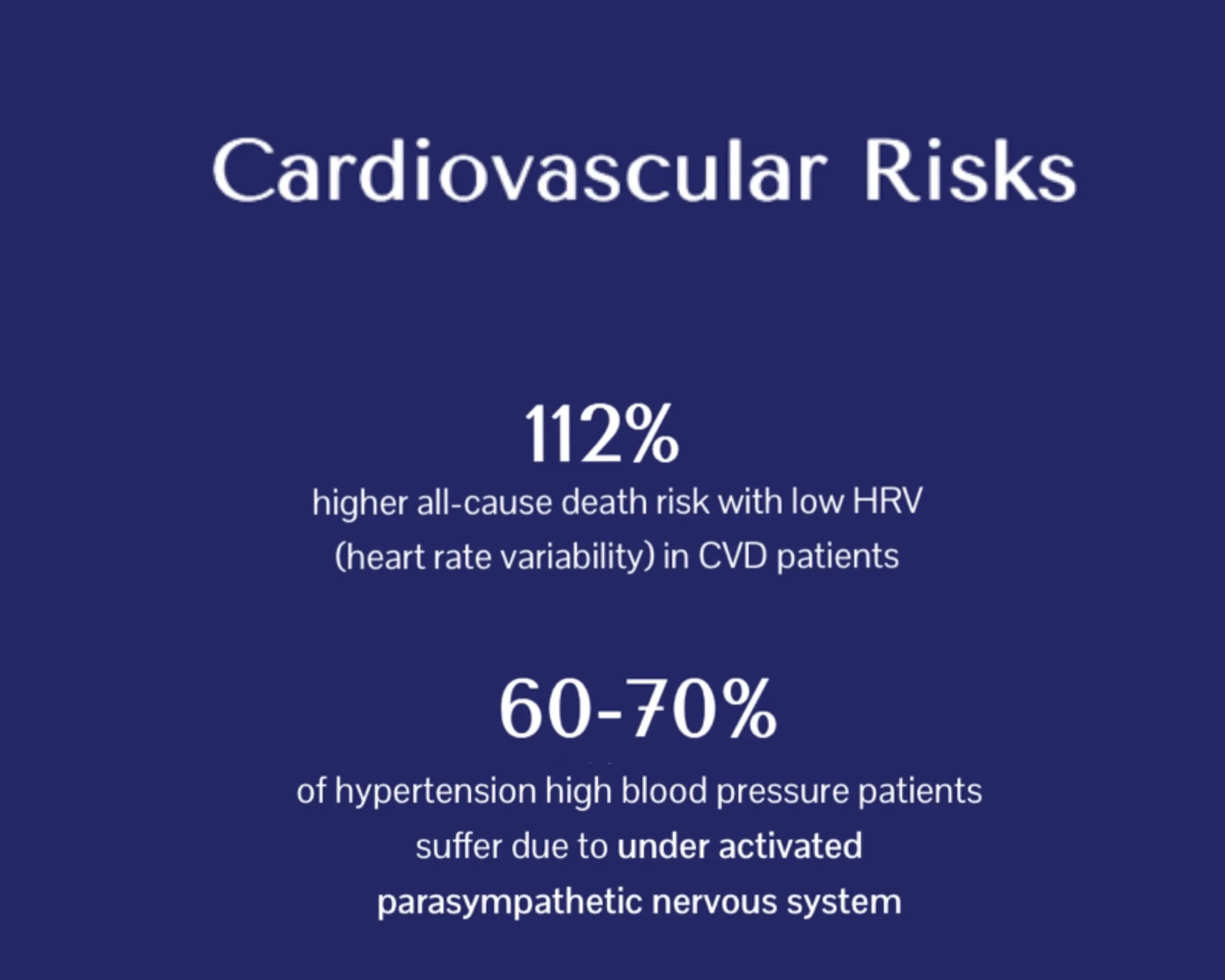
Stress-related health issues are on the rise, affecting sleep, mental health, heart health, and more. Activating the parasympathetic nervous system through breathing exercises can address all of these at once yet, most guided breathing tools require a screen, undermining the very calm they're meant to create.

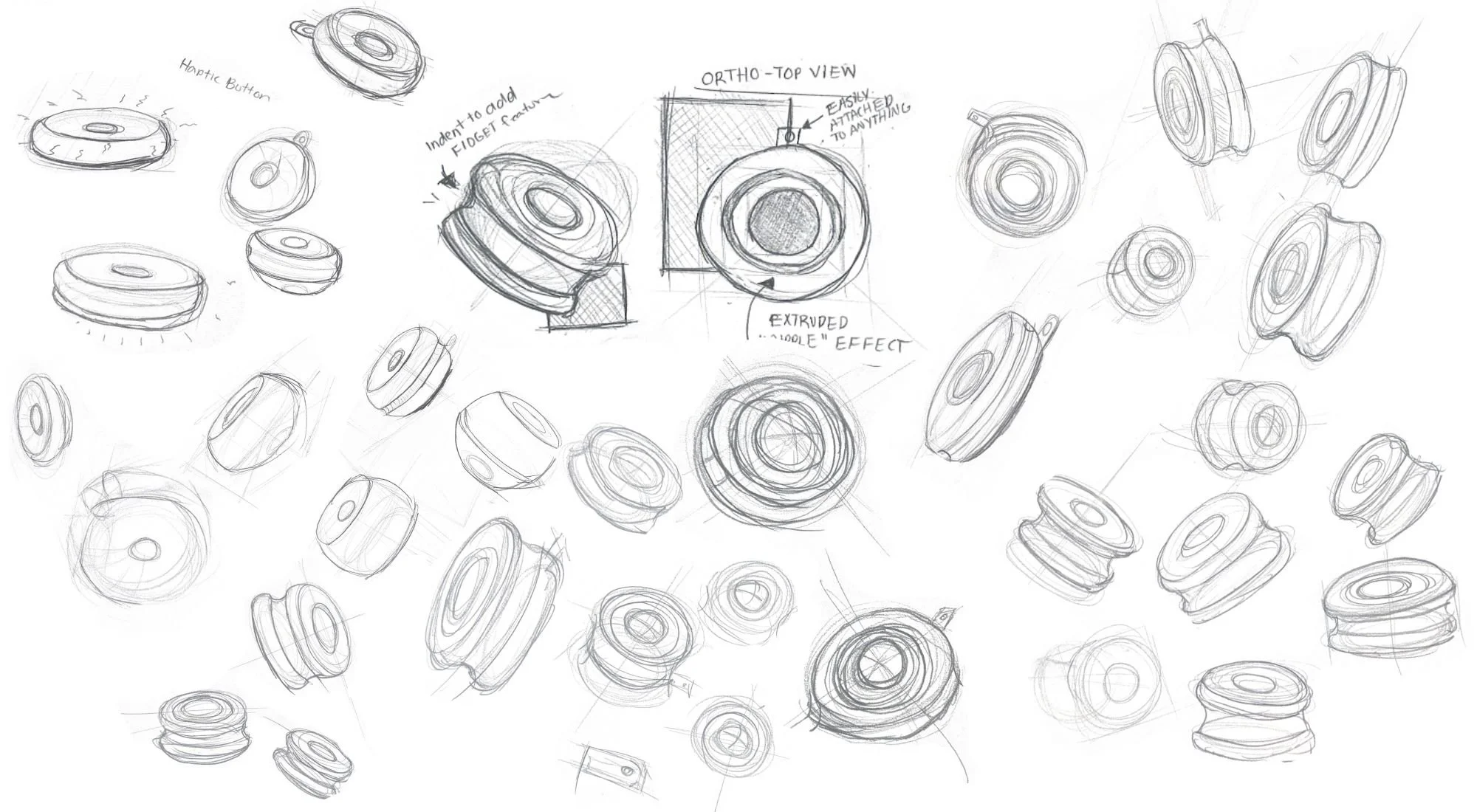
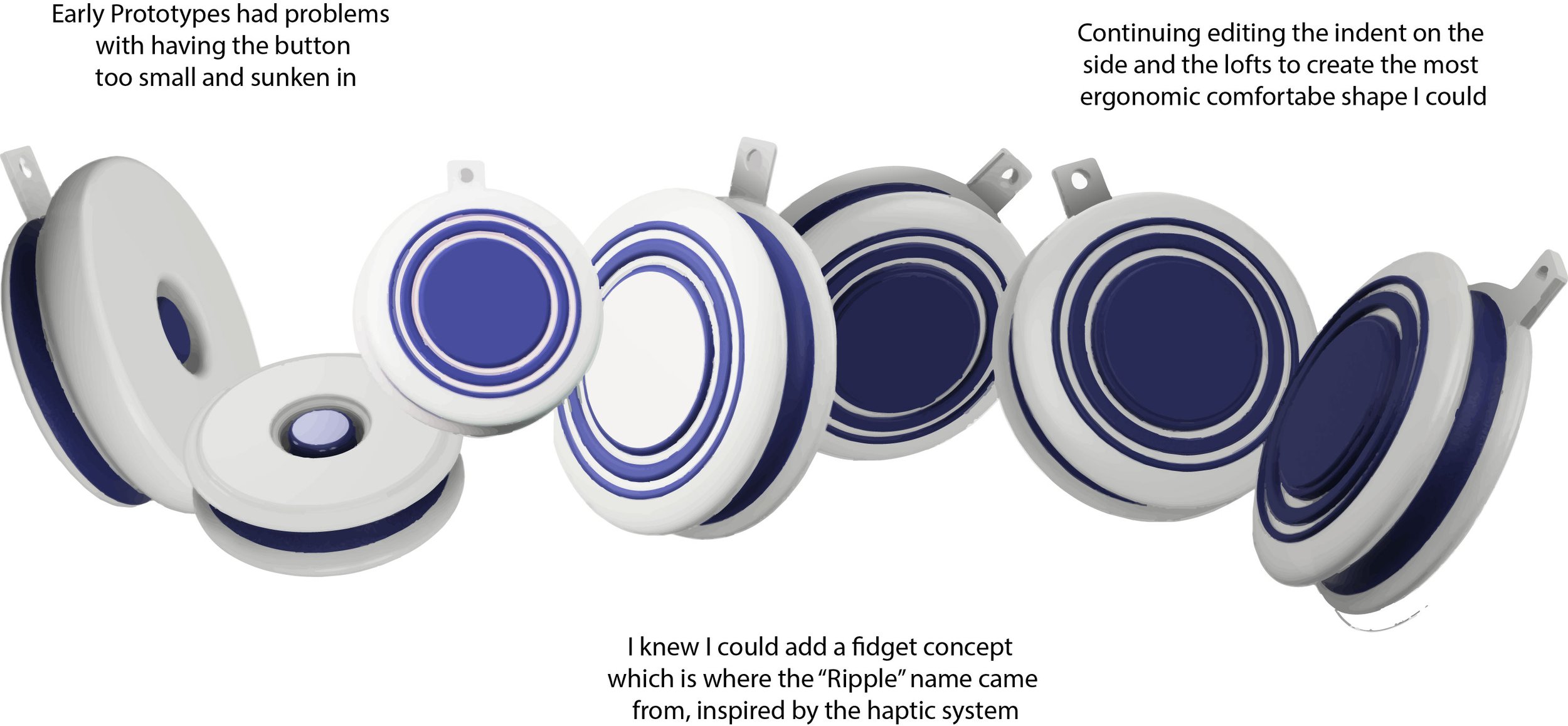
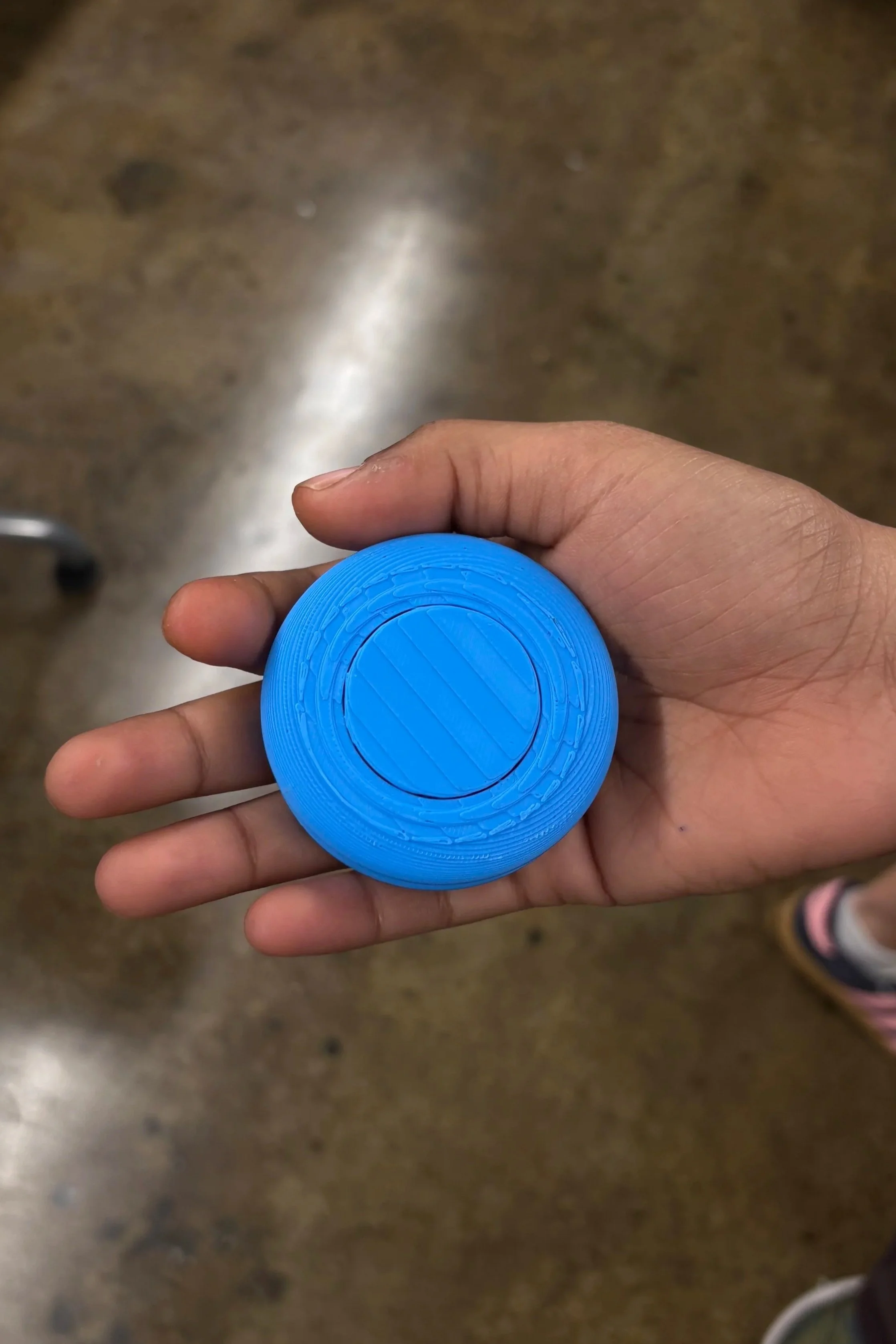
The first few physical prototypes I made, testers said were too bulky, and hard to grasp

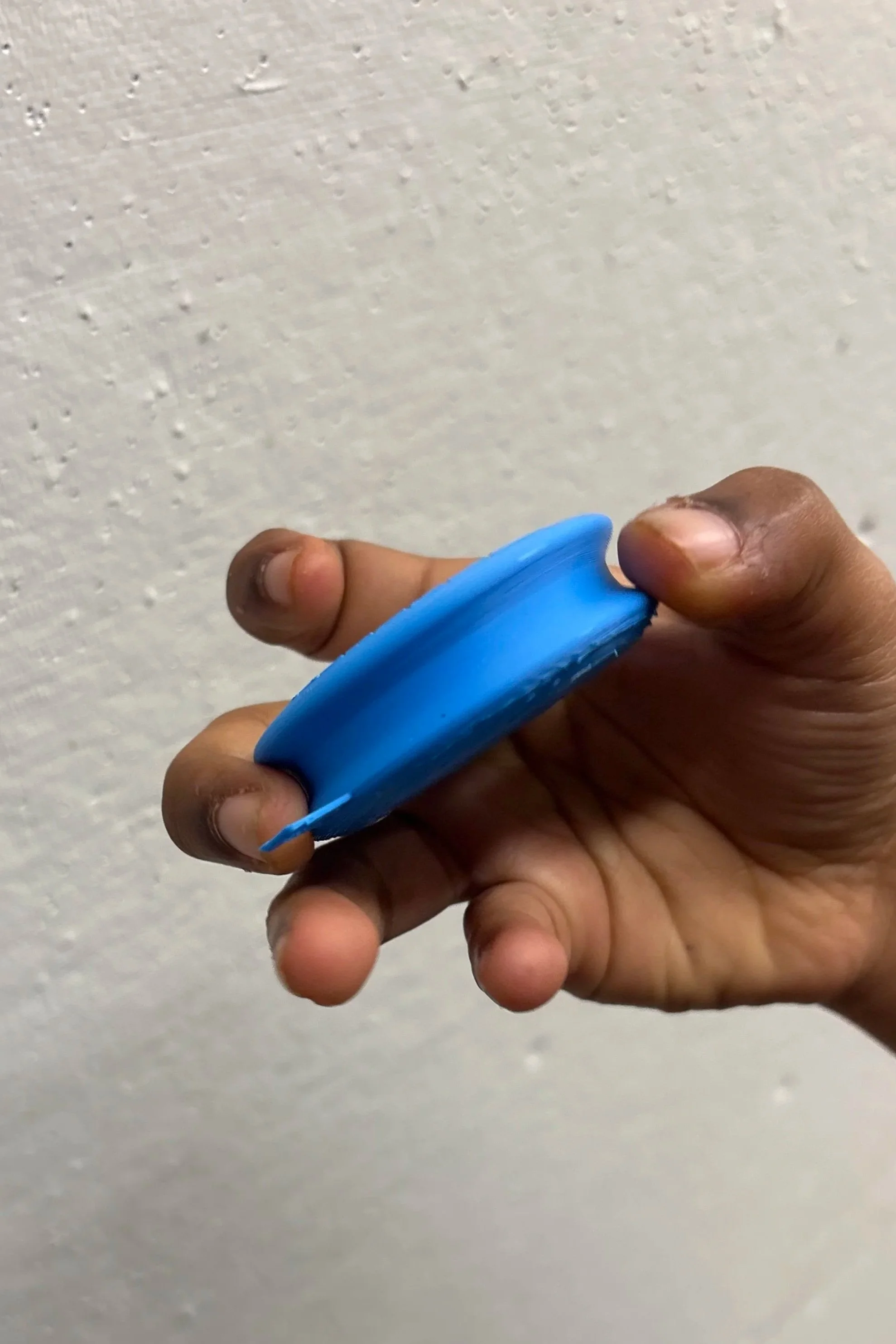
Hard to fit fingers into fidget area and very hard to handle
Physical Prototyping
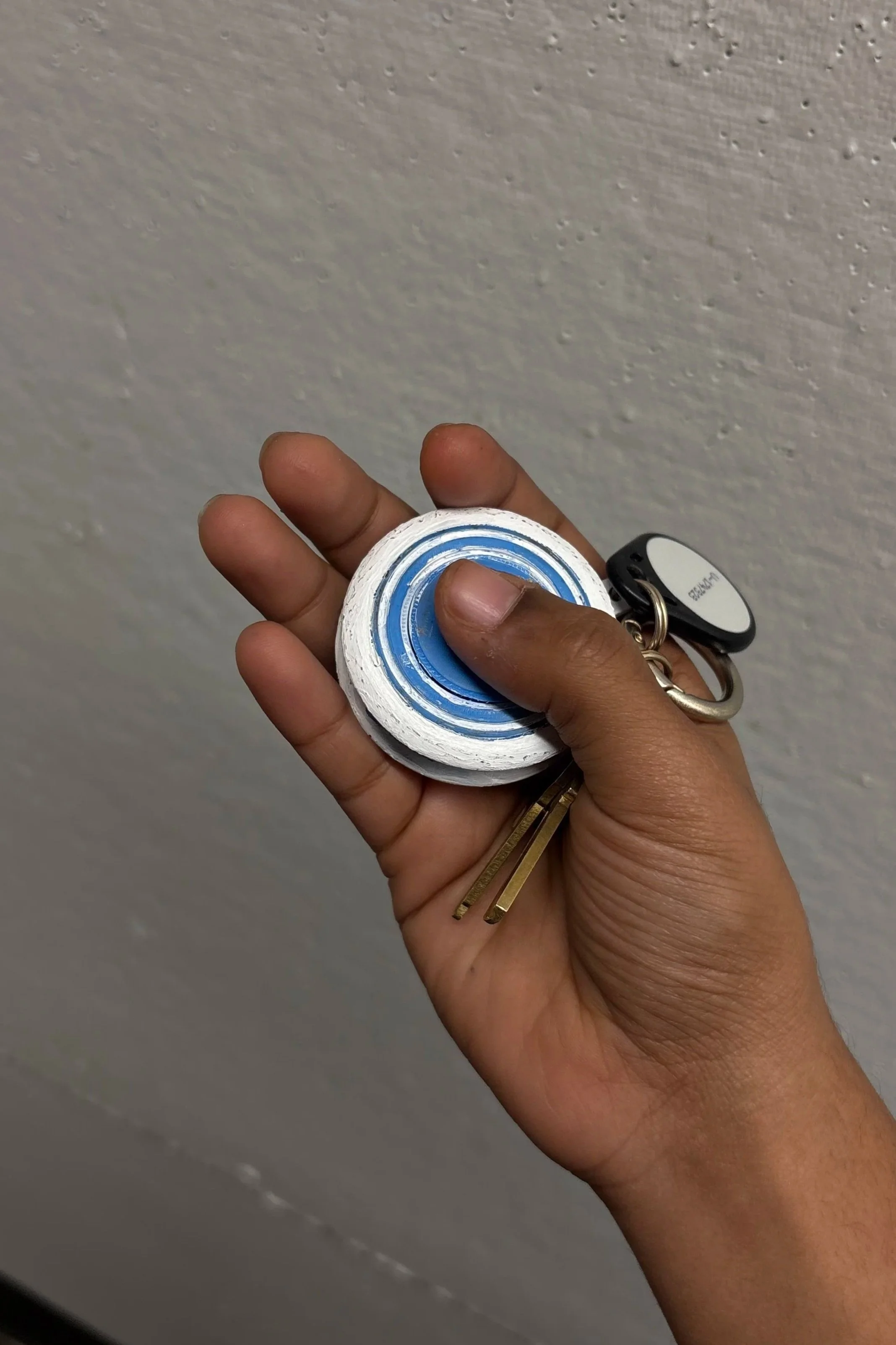
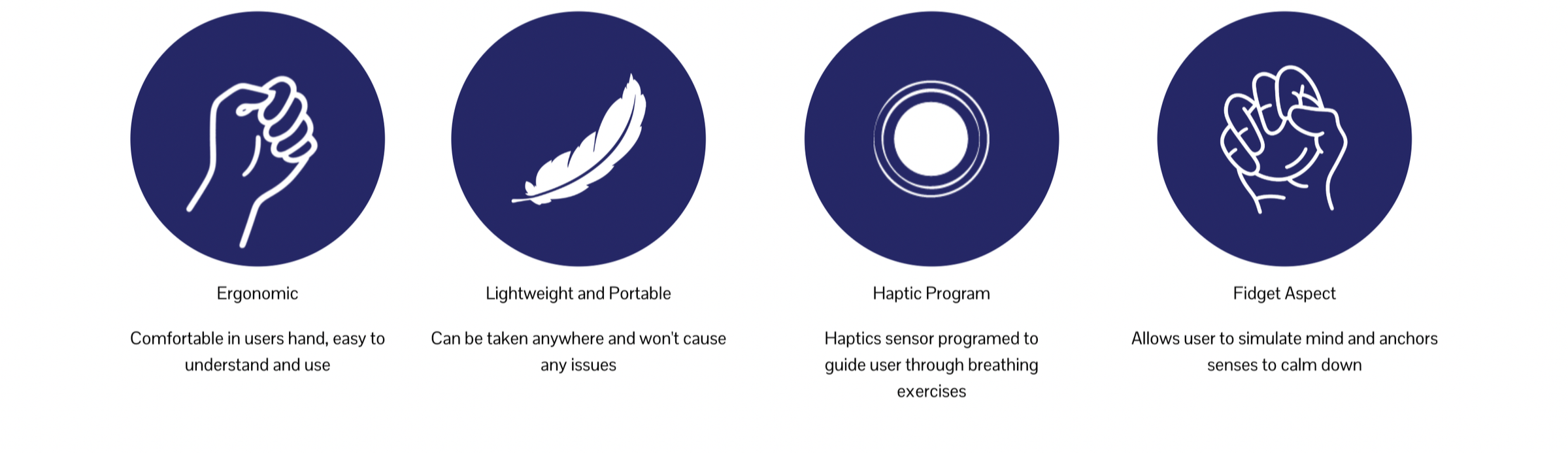
In my final prototype I had it to be easily attached to someone’s keys for easy access
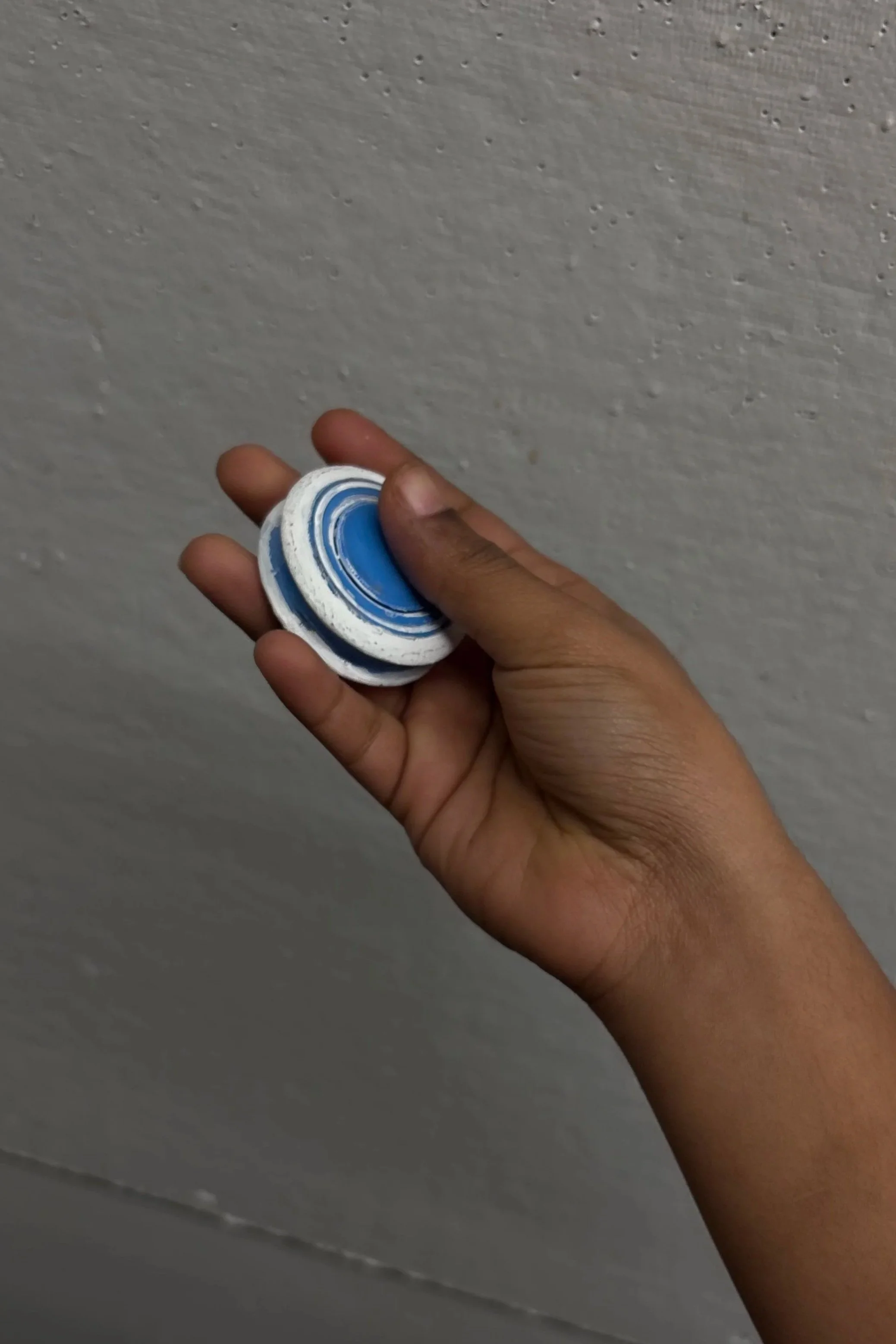
Through more tests I found that a smaller shape worked best for people
Breathing Exercises
To understand how the haptics would work and be programmed, I needed to find a breathing exercise that would be most universally effective across a multitude of users.
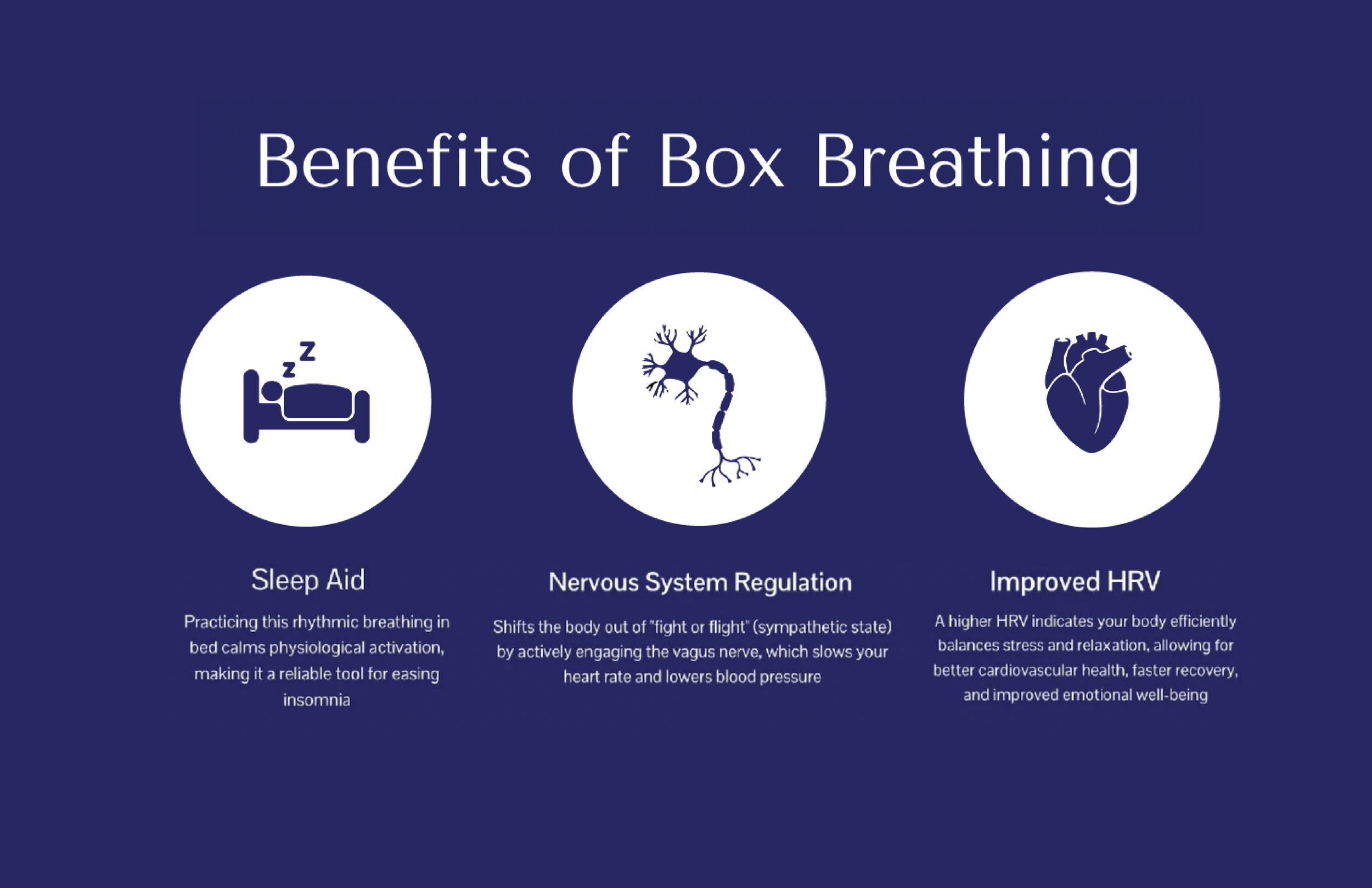
Benefits of Box Breathing
Nervous System Regulation
Shifts the body out of "fight or flight" (sympathetic state) by actively engaging the vagus nerve, which slows your heart rate and lowers blood pressure
Improved HRV
A higher HRV indicates your body efficiently balances stress and relaxation, allowing for better cardiovascular health, faster recovery, and improved emotional well-being
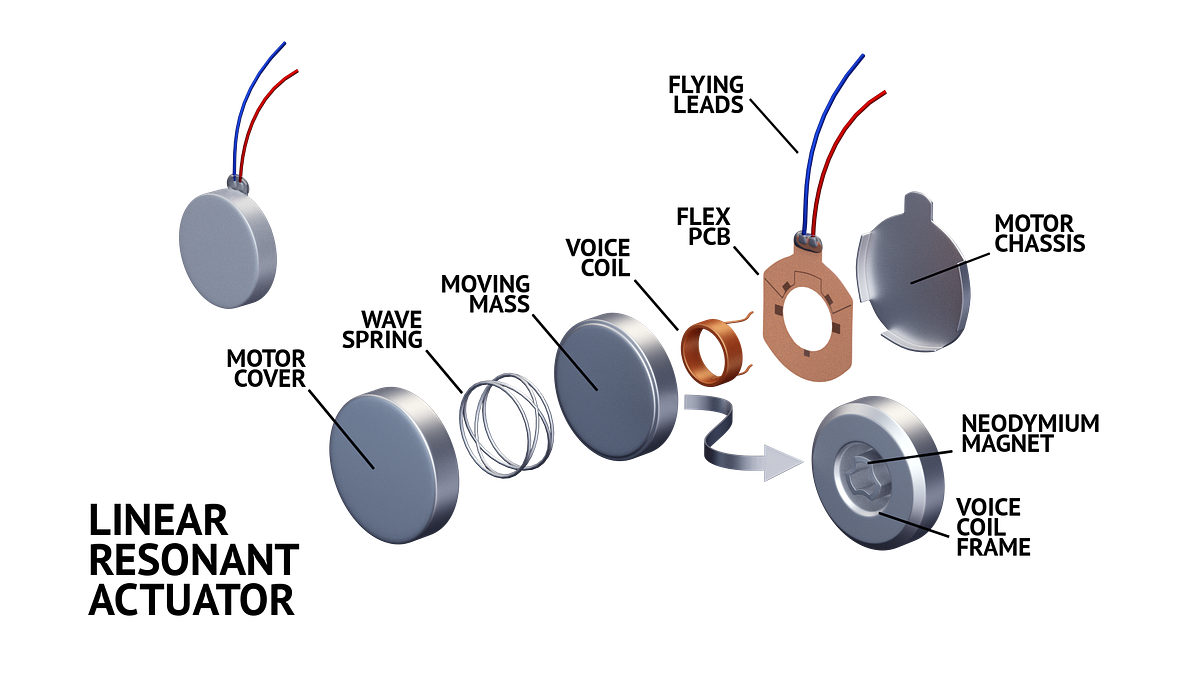
Linear Resonant Actuators
Haptic Programing and Technology
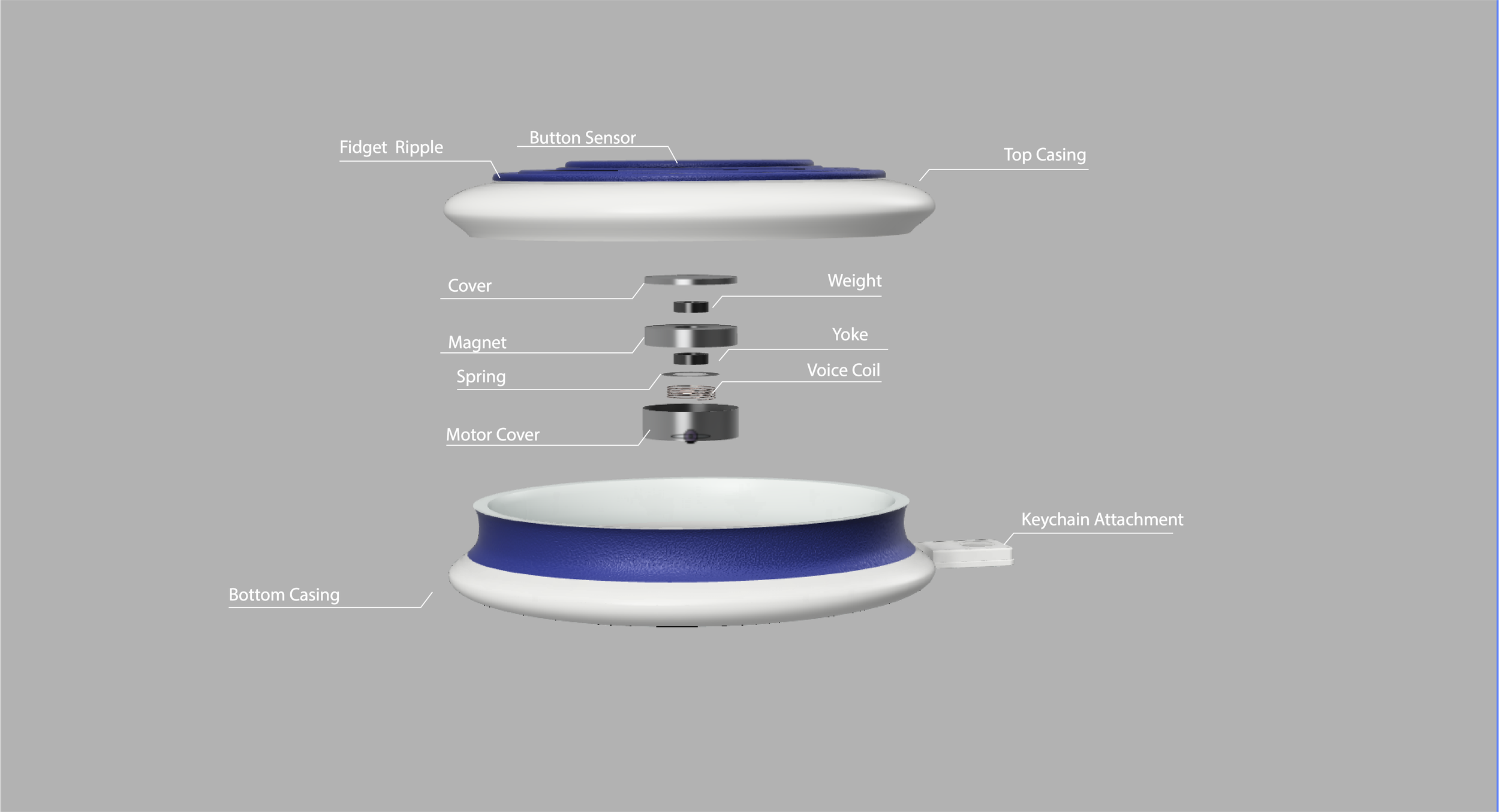
To replicate a button, an LRA simulates a button sensation through a sensor, after this, the LRA is coded to match the 4-4-4-4 breathing technique.
The coding involves using PWM (Pulse Width Modulation) to create a sinusoidal or square wave. By alternating different waves and the length of each one, the device can release haptics that can effectively communicate to the user how to breathe through their problem.